
The Church of Our Lady of Loreto in Trenta
The original building was a simple chapel, barely distinguishable from other village houses, with a wooden bell tower and a roof covered with wooden shingles. In 1908, the church was partially remodelled: a bell tower was added on the northern side, using stones from a demolished former blast furnace. The original smaller bell from 1713, cast from Trenta iron, is now on display in the permanent exhibition at the Trenta Information Centre (Dom Trenta).
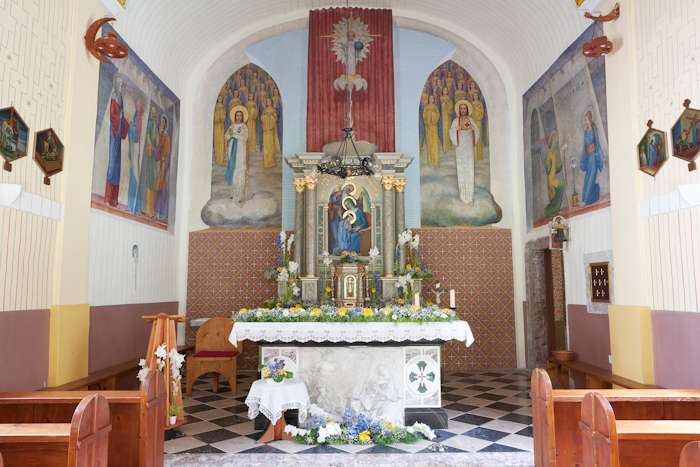
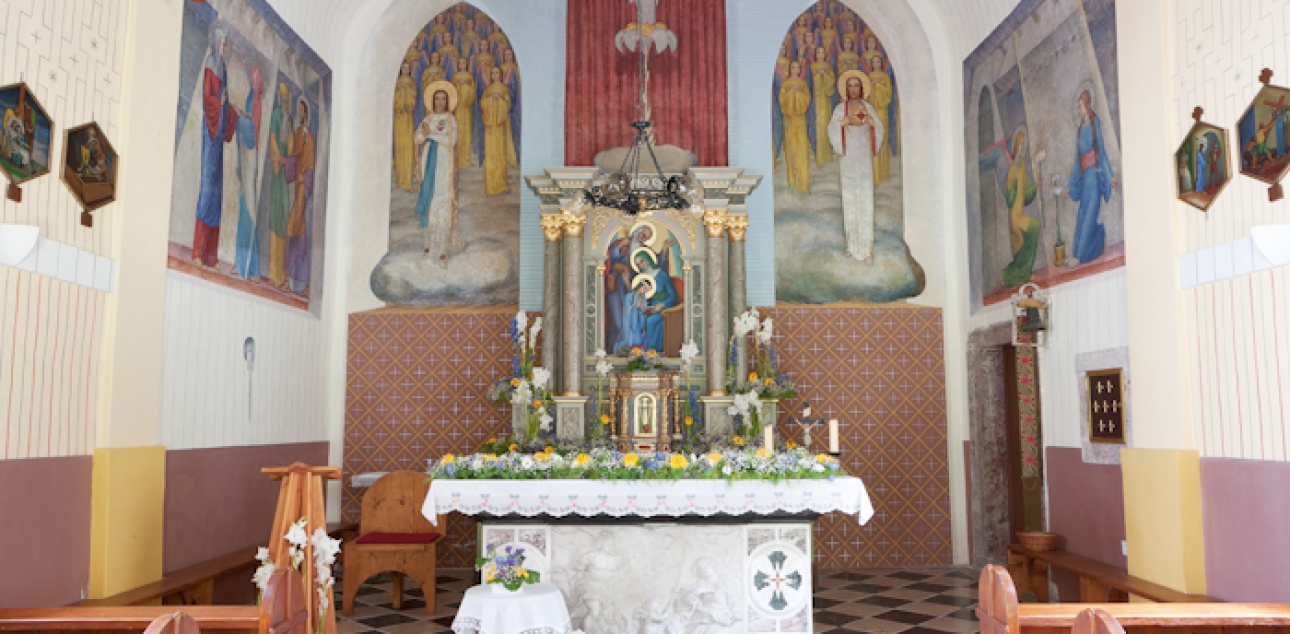
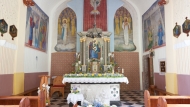
The interior of the church was painted in 1945 by the artist Tone Kralj. He worked within the context of the resistance against the Italian fascist authorities in Slovenian territory, which had been annexed to the Kingdom of Italy after the First World War under the Treaty of Rapallo. In his church murals, Kralj incorporated anti-war, anti-fascist and anti-Nazi symbols, while at the same time using his art to affirm the Slovenian national space.
Among the notable priests who served in Trenta was Frančišek Venceslav Luncenperger from Gorizia, who arrived in Trenta in 1715 and is still affectionately remembered by the locals as “rajnki Trentar” (the late Trentar). After his death in 1781, Trenta had no resident priest for as many as 77 years. He is buried in the church, and a commemorative plaque dedicated to him is set into the floor.
One of the church’s special features is the wooden statue of the Black Madonna with Child, placed in a niche above the altar. The statue is covered by a canvas painting depicting the Holy Family and can only be seen on the Feast of Our Lady of Loreto on 10 December, and during the celebration of the feast day of Saints Joachim and Anne, which takes place on the last Sunday of July.
Nearby, you can visit the Trenta TNP Information and Education Centre, explore the Juliana Alpine Botanical Garden, or take a walk along the Soča Trail.
Your safety is your responsibility
In the natural environment, you may encounter falling rocks and trees, slippery and uneven terrain, sudden changes in weather, high water levels and wild animals. The park authority maintains trails within the scope of its responsibilities and available resources but cannot guarantee your safety. Visitors are responsible for adapting their plans to the weather and trail conditions, choosing trails suited to their abilities, using appropriate equipment, staying on marked trails and acting responsibly.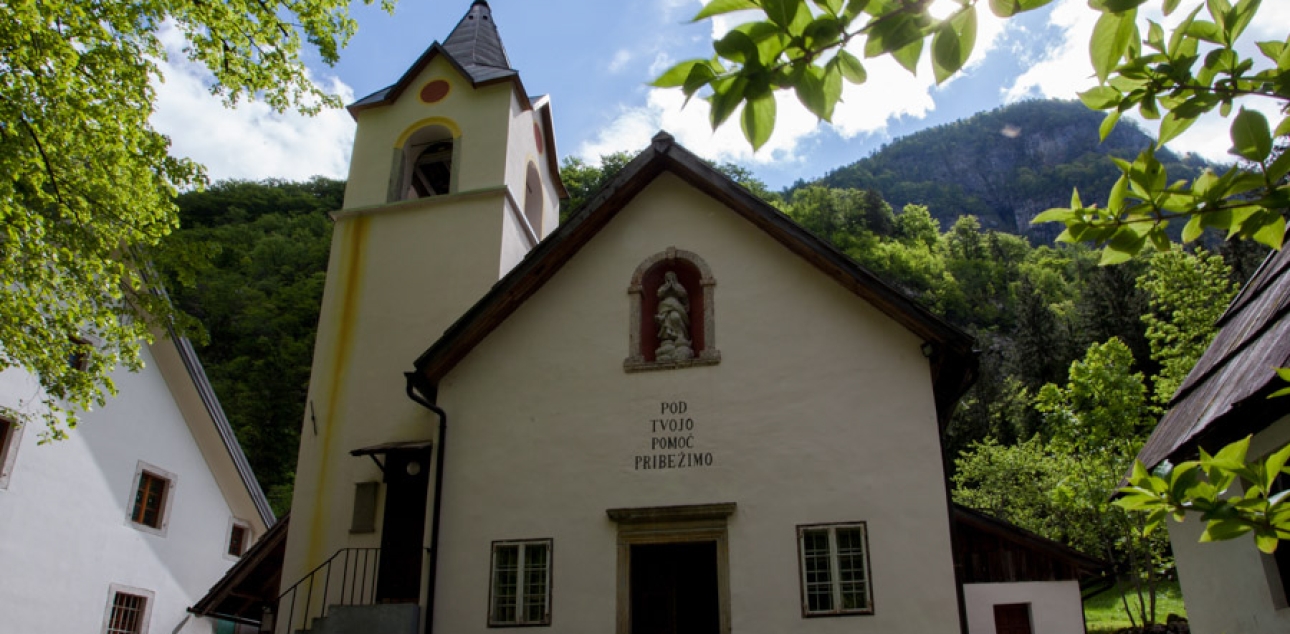


Thank you.