
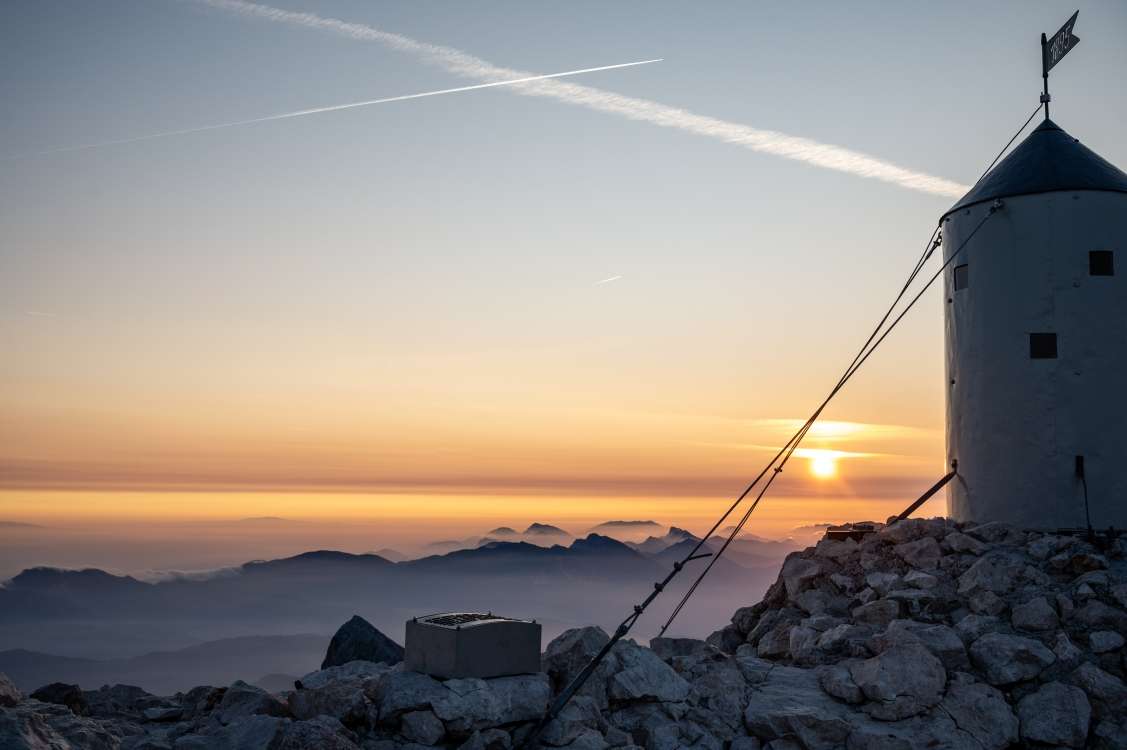
The Aljaž Tower on the Triglav
The tower at the summit of Triglav was designed and built by Jakob Aljaž, the priest of Dovje, after whom it was later named. At the time, the territory of present-day Slovenia was part of the Austro-Hungarian Empire. Deeply concerned by growing German influence in the region and in the mountains, Aljaž came up with the idea of building a tower on Triglav as a symbolic stronghold of Slovenian identity.
By the time Aljaž arrived on the scene, the German-Austrian Alpine Association had already established a strong presence in the Slovenian mountains. It built mountain trails and huts, but these facilities offered little room for Slovenian mountaineers. In response, Aljaž purchased the summit of Triglav from the municipality of Dovje for one gulden. He then gave his plans for the tower to Anton Belc, a tinsmith from Šentvid, who constructed the sheet-metal tower in his workshop.
On 7 August 1895, Aljaž and five assistants carried the tower to the summit of Triglav and erected it there. Securing it firmly to the rocky summit took five hours. The 1.9-metre-high tower had four small windows and contained three stools, a visitors’ book, a spirit stove and a panoramic painting of Triglav by the artist Pernhart. It was also equipped with a telegraph, allowing communication with Kredarica and Dovje.
A modest but solemn opening ceremony was held 15 days later, on 22 August 1895.
The tower was originally known as the Triglav Tower. It was only later renamed Aljaž Tower in honour of its creator.
In 1999, Aljaž Tower was declared a cultural monument of national importance.
This text is adapted from "The Aljaž Tower at the top of Triglav", published in the Triglav Treasury (Triglavska zakladnica).
Your safety is your responsibility
In the natural environment, you may encounter falling rocks and trees, slippery and uneven terrain, sudden changes in weather, high water levels and wild animals. The park authority maintains trails within the scope of its responsibilities and available resources but cannot guarantee your safety. Visitors are responsible for adapting their plans to the weather and trail conditions, choosing trails suited to their abilities, using appropriate equipment, staying on marked trails and acting responsibly.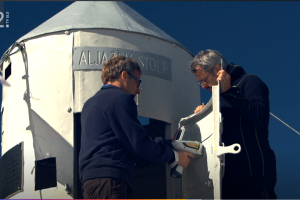
Thank you.