
Digital library
Showing results 12 - 21/21
Understanding and managing the interactions of impacts from nature-based recreation and climate change
Disturbance to ecosystems in parks and protected areas from nature-based tourism and recreation is increasing in scale and severity, as are the impacts of climate change—but there is limited research examining the degree to which these anthropogenic disturbances interact. In this perspective paper, we draw on the available literature to expose complex recreation and climate
interactions that may alter ecosystems of high conservation value such that important species and processes no longer persist. Our emphasis is on ecosystems in high demand for tourism and recreation that also are increasingly experiencing stress from climate change. We discuss the importance of developing
predictive models of direct and indirect effects, including
threshold and legacy effects at different levels of biological
organization. We present a conceptual model of these
interactions to initiate a dialog among researchers and
managers so that new research approaches and managerial
frameworks are advanced to address this emerging issue.
Source
ResearchGate, Ostalo
Year
2020
Type
Original scientific article
Format
Website
Authors
Christoper A. Monz, Kevin J. Gutzwiller, Vera Helen Hausner, Mark W. Brunson, Ralf Christopher Buckley, Catherine M. Pickering
Keywords
Climate change, Nature-based tourism, Park and protected area management, Recreation ecology
Območja
World
Effects of cumulated outdoor activity on wildlife habitat use
Humans profoundly affect animal distributions by directly competing for space, not only transforming, but actively using their habitat. Anthropogenic disturbance is usually measured via structural proxies such as infrastructure and land use that overlook the impact of human presence, or functional disturbance. In this study,
we propose a methodology unifying two paradigms, human mobility and animal movement, to fill this gap. We developed a novel spatially-explicit index of anthropic disturbance, the Cumulative Outdoor activity Index (COI), and validated it with ground truth observations derived from camera trapping (r = +0.63, p < 0.001). Building on previous work from Peters et al. (2015, Biol. Cons. 186, 123–133) on a Critically Endangered brown bear population in the Alps, we used Resource Selection Analysis to assess the influence of different forms of anthropogenic disturbance on the relative probability of habitat selection. The intensity of COI provided an
effective measure of functional anthropogenic disturbance, and it outperformed all alternative and commonlyused proxies of structural disturbance in predicting bear habitat use. Our predictions suggest that brown bear shrinks its ecological niche as a consequence of intense human use of otherwise suitable habitat. These constraints may limit the potential range expansion of bears to establish a viable Alpine-Dinaric metapopulation. Conclusive conservation and future land use planning towards human-wildlife coexistence should account for the functional presence of humans on the landscape. The proposed COI could help determine where mitigation measures should be enforced.
Source
ResearchGate
Year
2020
Type
Research
Format
Website
Authors
Andrea Corradini, Matthias Randles, Luca Pedrotti, Emiel von Loon, Gioele Passoni, Valentina Oberosler, Francesco Rovero, Clara Tattoni, Marco Ciolli, Francesca Cagnacci
Keywords
Strava, COI, bio-logging, human-wildlife conflict, Ursus arctos, habitat selection
Območja
World
Relative effects of recreational activities on a temperate terrestrial wildlife assemblage
Outdoor recreation is one of the fastest growing economic sectors in the world and provides many benefits to people. Assessing possible negative impacts of recreation is nevertheless important for sustainable management. Here, we used camera traps to assess relative effects of various recreational activities—as compared to each other and to environmental conditions—on a terrestrial wildlife assemblage in British Columbia, Canada. Across 13 species, only two negative associations between recreational activities and wildlife detections were observed at weekly scales: mountain biking on moose and grizzly bears. However, finer-scale analysis showed that all species avoided humans on trails, with avoidance strongest for mountain biking and motorized vehicles. Our results imply that environmental factors generally shaped broad-scale patterns of wildlife use, but highlight that recreational activities also have detectable impacts. These impacts can be monitored using the same camera-trapping techniques that are commonly used to monitor wildlife assemblages.
Source
ResearchGate
Year
2020
Type
Original scientific article
Format
Website
Authors
Robin Naidoo, A. Cole Burton
Keywords
Bayesian models, camera traps, grizzly bear, hiking, horseback riding, logging, motorized vehicles, mountain biking, protected areas, tourism
Območja
World
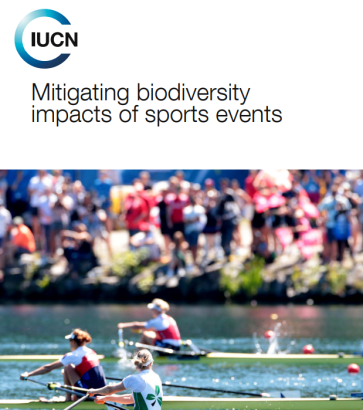
Mitigating biodiversity impacts of sports events
There is growing recognition of the need for sport and sports events to be conducted in socially and environmentally responsible ways and this is reflected in the attitudes of governments, public authorities and regulators. This means that taking a proactive and diligent approach to environmental management is a vital part of the sport sector’s licence to operate as well as growing and sustaining fan bases. Biodiversity conservation should be a key element in any environmentally responsible approach to sports event management. These guidelines focus on the often complex links between biodiversity and sport, and highlight that sports events can also benefit biodiversity. Each event offers an opportunity to raise public awareness of the value of nature and influence attitudes towards biodiversity and its conservation. These guidelines provide an overview of the issues and risks. They also offer help on how to make informed choices in avoiding harmful impacts and achieving positive outcomes. All parties involved in the planning and delivery of sports events are responsible for understanding and managing the potential biodiversity impacts and opportunities to ensure no lasting harm, and preferably a lasting positive legacy.
Source
International Union for Conservation of Nature
Year
2020
Type
Publication
Format
Document (PDF, DOC, ...)
Authors
Susie Brownlie, Joseph W. Bull, David Stubbs
Keywords
Sport, environmental management, biodiversity conservation, sport events
Območja
World
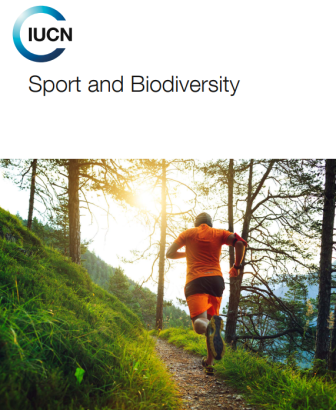
Sport and Biodiversity
Sport can have significant negative impacts on biodiversity, through the construction and use of sports venues and the staging of sporting events. Understanding and managing the potential negative impacts and opportunities for conservation is vital for ensuring that sports venues and sporting events deliver successfully both from the financial and operational standpoint. This guide is designed to help decision makers understand these potential impacts, and to present options for mitigating them, as well as for maximising opportunities to use sport as a way to promote and enhance biodiversity conservation.
Source
International Union for Conservation of Nature
Year
2018
Type
Publication
Format
Document (PDF, DOC, ...)
Keywords
Sport, negative impacts, biodiversity conservation, biodiversity
Območja
World
Effects of Recreation on Animals Revealed as Widespread through a Global Systematic Review
Outdoor recreation is typically assumed to be compatible with biodiversity conservation and is permitted in most protected areas worldwide. However, increasing numbers of studies are discovering negative effects of recreation on animals. We conducted a systematic review of the scientific literature and analyzed 274 articles on the effects of non-consumptive recreation on animals, across all geographic areas, taxonomic groups, and recreation activities. We quantified trends in publication rates and outlets, identified knowledge gaps, and assessed evidence for effects of recreation. Although publication rates are low and knowledge gaps remain, the evidence was clear with over 93% of reviewed articles documenting at least one effect of recreation on animals, the majority of which (59%) were classified as negative effects. Most articles focused on mammals (42% of articles) or birds (37%), locations in North America (37.7%) or Europe (26.6%), and individual-level responses (49%). Meanwhile, studies of amphibians, reptiles, and fish, locations in South America, Asia, and Africa, and responses at the population and community levels are lacking. Although responses are likely to be species-specific in many cases, some taxonomic groups (e.g., raptors, shorebirds, ungulates, and corals) had greater evidence for an effect of recreation. Counter to public perception, non-motorized activities had more evidence for a negative effect of recreation than motorized activities, with effects observed 1.2 times more frequently. Snow-based activities had more evidence for an effect than other types of recreation, with effects observed 1.3 times more frequently. Protecting biodiversity from potentially harmful effects of recreation is a primary concern for conservation planners and land managers who face increases in park visitation rates; accordingly, there is demand for sciencebased information to help solve these dilemmas.
Source
ResearchGate, Ostalo
Year
2016
Type
Research
Format
Website
Authors
Courtney L. Larson, Sarah E. Reed, Adina M. Merenlender, Kevin R. Crooks
Keywords
Outdoor recreation, biodiversity conservation, negative effects of recreation on animals
Območja
World
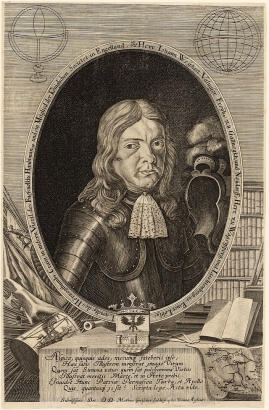
Documentary film: Valvasor's Glory
Valvasor’s The Glory of the Duchy of Carniola, first published in the distant year of 1689 and now translated into Slovenian, is an exceptional historical publication highly regarded across all fields of science, from natural sciences to humanities and social sciences. The third book of The Glory is particularly rich in illustrations and content that appeals to a broader audience, making it widely used. A copy of this work, heavily worn and damaged over the centuries, was entrusted for restoration to the Center for the Conservation and Restoration of Written and Graphic Heritage at the Archives of the Republic of Slovenia.
The broadcast, authored by Jadran Sterle and Tugo Štiglic in collaboration with Prof. Dr. Jedert Vodopivec Tomažič from the Archives of the Republic of Slovenia, delves into the fascinating discoveries of the material aspects of The Glory of the Duchy of Carniola, explores the technical background of its creation, and demonstrates how such a priceless book can be restored.
Source
RTV Slovenia (RTV365)
Year
2016
Type
Video clip
Format
Video
Keywords
Janez Vajkard Valvasor, history, The Glory of the Duchy of Carniola
Območja
Slovenia, World
Environmental Impacts: The Dark Side of Outdoor Recreation?
Outdoor recreation is increasing in popularity throughout the United States. Heretofore, many believed that nonconsumptive outdoor recreation was an environmentally benign activity. Increasing evidence, however, indicates that these activities are, in fact, not benign. On the contrary, data suggest that outdoor recreation can affect wildlife individuals, populations, and communities. For example, a recent survey of factors responsible for the decline of federally listed threatened and endangered species finds that outdoor recreation is the second leading cause.
Source
Other
Year
1998
Type
Published scientific paper at the conference
Format
Website
Author
Scott G. Miller
Keywords
Outdoor recreation, wildlife, threatened and endangered species, environmental Impacts
Območja
World
Impacts of recreation on biodiversity in wilderness
We discuss seven recreational impacts on biodiversity in wilderness areas. These include: 1) construction of trails, 2) trampling of vegetation and soils on trails and campsites, 3) collection and burning of wood in campfires, 4) water pollution associated with camping activities, 5) unintentional harassment of animals, 6) hunting, fishing, and associated management programs, and 7) grazing by processes and functions of ecosystems. The activities which have caused the greatest impact on diversity at a regional scale are fishing, hunting and associated management practices. None of these perturbations, however, have been studied in insufficient detail to assess their long-term impact.
Source
ResearchGate
Year
1990
Type
Original scientific article
Format
Website
Authors
David N. Cole, Richard L. Knight
Keywords
Biodiversity, recreational impacts, wilderness areas
Območja
World
Was this page helpful?
Thank you
Thank you.