
Digital library
Showing results 1 - 12/21
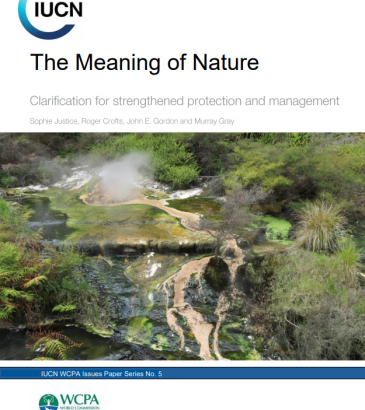
The Meaning of Nature: Clarification for strengthened protection and management
“Nature” is a widely used but rarely defined term amongst scientists, policy makers, business leaders and the public. It is at the heart of many important international frameworks and conventions that, in turn, shape national policy and regulation towards the natural environment. Not only is nature often freely used interchangeably with the term “biodiversity”, but the abiotic component is also often poorly understood and frequently overlooked.
Source
ResearchGate, International Union for Conservation of Nature & IUCN World
Year
2025
Type
Publication
Format
Website
Authors
Sophie Justice, Roger Crofts, John E. Gordon, Murray Gray
Keywords
Nature, biodiversity, climate change, sea-level rise, biodiversity loss, land use change, unsustainable resource use
Območja
World
Short-term summer trips: Climate hazards & substitution
Climate change and related impacts on tourism and outdoor recreation in Austria are increasingly felt in the number of hot days and variable weather conditions. This paper investigates how these
effects likely influence visitor behavior in the future. A survey with an integrated discrete choice experiment was applied combining weather information, travel distances, travel means, attraction type, certification and parking fees (N = 5544). The analysis of the results yielded a four-class model which showed different substitution behaviors during unpleasant weather conditions,
making clear that decisions are based on complex trade-offs and lead to significant behavioral changes under climate change conditions. For destination management, these innovative insights
into planning behavior and greater understanding of the four segments are crucial for future product development.
Source
ResearchGate
Year
2024
Type
Research
Format
Website
Authors
Ulrike Probstl-Haider, Alice Wanner
Keywords
Substitution, segmentation, choice experiment, climate change adaptation, behavioral change, Austria
Območja
World
Characterizing nature-based recreation preferences in a Mediterranean small island environment using crowdsourced data
Nature-based recreation is a key ecosystem service that contributes to positive physical and mental welfare but, at the same time, nature-based recreational activities can increase human
pressure and impacts on natural areas and biodiversity. Understanding people’s preference for visiting natural settings is challenging due to data and methodological limitations. Social
media data can be used to map nature-based recreation. However, variation in popularity of platforms and limitations to data accessibility are highlighting the importance of exploring and using different data sources. We analyzed complementary crowdsourced data using an automated content analysis refined by manual identification to assess nature-based recreation ecosystem services across the Maltese archipelago. A content analysis of images uploaded to Flickr between 2015 and 2021 was performed using the Google Vision machine learning algorithm to identify nature-based interactions and nature visitation patterns were
modeled based on landscape characteristics, environmental variables and socio-economic parameters. Flickr data were compared and complemented with publicly available geolocated
data from the iNaturalist platform. Significant difference was found between the spatial distribution of Flickr and iNaturalist data. Generalized linear models identified coastal areas, protected areas, natural habitats and accessibility via the road network as significant predictors of nature-based recreational visits. Localities with a higher percentage of people receiving old age and unemployment benefits were also positively correlated with users’ preference for nature-based recreation. Finally, we discussed how the low resource methodology developed here to identify people’s nature-based recreational preferences can be used to assess which natural areas should be prioritized for ecological restoration efforts.
Source
ResearchGate
Year
2023
Type
Research
Format
Website
Authors
Laura Costadone, Mario V. Balzan
Keywords
Nature-based recreation, cultural ecosystem services, Flickr, iNaturalist, Google Vision
Območja
World
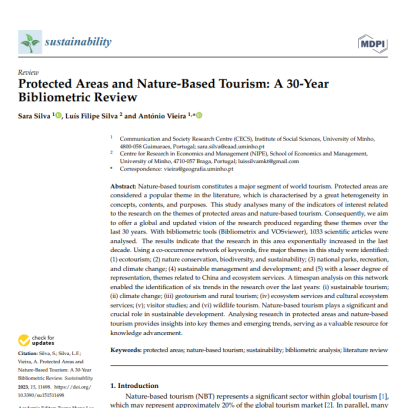
Protected Areas and Nature-Based Tourism: A 30-Year Bibliometric Review
Nature-based tourism constitutes a major segment of world tourism. Protected areas are considered a popular theme in the literature, which is characterised by a great heterogeneity in concepts, contents, and purposes. This study analyses many of the indicators of interest related to the research on the themes of protected areas and nature-based tourism. Consequently, we aim
to offer a global and updated vision of the research produced regarding these themes over the last 30 years. With bibliometric tools (Bibliometrix and VOSviewer), 1033 scientific articles were
analysed. The results indicate that the research in this area exponentially increased in the last decade. Using a co-occurrence network of keywords, five major themes in this study were identified: (1) ecotourism; (2) nature conservation, biodiversity, and sustainability; (3) national parks, recreation, and climate change; (4) sustainable management and development; and (5) with a lesser degree of representation, themes related to China and ecosystem services. A timespan analysis on this network
enabled the identification of six trends in the research over the last years: (i) sustainable tourism; (ii) climate change; (iii) geotourism and rural tourism; (iv) ecosystem services and cultural ecosystem
services; (v); visitor studies; and (vi) wildlife tourism. Nature-based tourism plays a significant and crucial role in sustainable development. Analysing research in protected areas and nature-based tourism provides insights into key themes and emerging trends, serving as a valuable resource for knowledge advancement.
Source
ResearchGate
Year
2023
Type
Research
Format
Website
Authors
Sara Silva, Luís Filipe Silva, António Vieira
Keywords
Protected areas, nature-based tourism, sustainability, bibliometric analysis, literature review
Območja
World
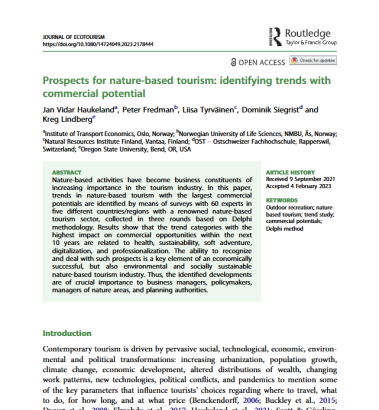
Prospects for nature-based tourism: identifying trends with commercial potential
Nature-based activities have become business constituents of increasing importance in the tourism industry. In this paper, trends in nature-based tourism with the largest commercial potentials are identified by means of surveys with 60 experts in five different countries/regions with a renowned nature-based tourism sector, collected in three rounds based on Delphi methodology. Results show that the trend categories with the highest impact on commercial opportunities within the next 10 years are related to health, sustainability, soft adventure, digitalization, and professionalization. The ability to recognize and deal with such prospects is a key element of an economically successful, but also environmental and socially sustainable nature-based tourism industry. Thus, the identified developments are of crucial importance to business managers, policymakers, managers of nature areas, and planning authorities.
Source
Other
Year
2023
Type
Research
Format
Document (PDF, DOC, ...)
Authors
Jan Vidar Haukeland, Peter Fredman, Liisa Tyrväinen, Dominik Siegrist, Kreg Lindberg
Keywords
Outdoor recreation, nature-based tourism, trend study, commercial potentials, Delphi method
Območja
World
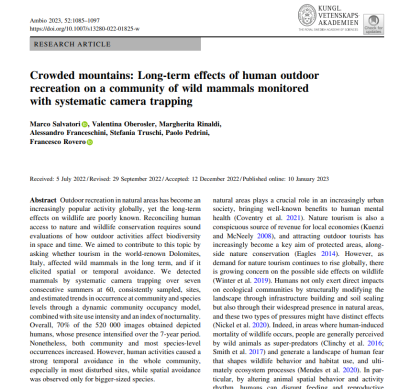
Crowded mountains: Long-term effects of human outdoor recreation on a community of wild mammals monitored with systematic camera trapping
Outdoor recreation in natural areas has become an increasingly popular activity globally, yet the long-term effects on wildlife are poorly known. Reconciling human access to nature and wildlife conservation requires sound evaluations of how outdoor activities affect biodiversity in space and time. We aimed to contribute to this topic by asking whether tourism in the world-renown Dolomites,
Italy, affected wild mammals in the long term, and if it elicited spatial or temporal avoidance. We detected mammals by systematic camera trapping over seven consecutive summers at 60, consistently sampled, sites, and estimated trends in occurrence at community and species levels through a dynamic community occupancy model, combined with site use intensity and an index of nocturnality. Overall, 70% of the 520 000 images obtained depicted
humans, whose presence intensified over the 7-year period.
Nonetheless, both community and most species-level occurrences increased. However, human activities caused a strong temporal avoidance in the whole community, especially in most disturbed sites, while spatial avoidance was observed only for bigger-sized species.
Source
ResearchGate
Year
2023
Type
Research
Format
Website
Authors
Marco Salvatori, Valentina Oberosler, Margherita Rinaldi, Alessandro Franceschini, Stefania Truschi, Paolo Pedrini, Francesco Rovero
Keywords
Biodiversity monitoring, human disturbance, nature tourism, occupancy modeling, outdoor recreation
Območja
World
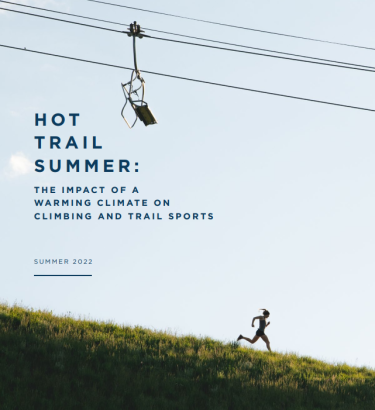
Hot trail summer: The impact of a warming climate on climbing and trail sports
This report, created in collaboration with master’s students at UC Santa Barbara’s Bren School of Environmental Science
& Management, examines how climate change impacts the rock climbing, trail running, hiking and mountain biking communities and outlines what many of us already know: that no matter the
season, a warming world has profound implications for outdoor recreation.
Source
Other
Year
2022
Type
Publication
Format
Document (PDF, DOC, ...)
Authors
Matt Koller, Karla Garibay Garcia, Sage Kime, Will Geiken, Sam Fearer
Keywords
Climate change, outdoor recreation, rock climbing, trail running, hiking, mountain biking
Območja
World
Covid-19 and outdoor recreation – Lessons learned? Introduction to the special issue on “Outdoor recreation and Covid-19: Its effects on people, parks and landscapes” November 2022Journal of Outdoor Recreation and Tourism 41(11):100583 DOI:10.1016/j.jort.
The special issue presents international experiences with COVID-19 in the years 2020 and 2021 on outdoor recreation and nature-based tourism. To set the scene, a bibliometric and qualitative analysis illustrates and clusters recent publications on COVID-19. Against this background contributions from Japan, China, Brazil, Indonesia, Austria, Croatia, the United States, New Zealand, Taiwan, Australia, Sweden, Poland and Ireland draw
a truly international picture of the pandemic crisis, the effects, coping behavior and related strategies. The papers contribute to the COVID-19 related research by documenting the shock in the field of outdoor recreation and tourism, by understanding the immediate consequences on behavior and the required managerial consequences and finally, by analyzing the possible follow up effects including long term effects, discussing resilient solutions
and proposing new strategies. In the discussion section we try to answer the questions whether the high visitation rate in recreation facilities, forests, parks and protected areas will remain, and whether adapted visitor management concepts will be required. In addition, we discuss possible implications for urban planning and management. Finally, based on a changing connectedness to nature also possible positive effects by the pandemic are
discussed which may lead to a new target group in outdoor recreation and nature-based tourism.

Source
ResearchGate
Year
2021
Type
Research
Format
Website
Authors
Ulrike Pröbstl-Haider , Katharina Gugerell, Sreetheran Maruthaveeran
Keywords
Covid-19 pandemic, bibliometric, visitor management, behavioural change, green infrastructure, environmental justice, new normal
Območja
World
Recreation effects on wildlife: a review of potential quantitative thresholds
Outdoor recreation is increasingly recognised for its deleterious effects on wildlife individuals and populations. However, planners and natural resource managers lack robust scientific recommendations for the design of recreation infrastructure and management of recreation activities. We reviewed 38 years of
research on the effect of non-consumptive recreation on wildlife to attempt to identify effect thresholds or the point at which recreation begins to exhibit behavioural or physiological change to wildlife. We
found that 53 of 330 articles identified a quantitative threshold. The majority of threshold articles focused on bird or mammal species and measured the distance to people or to a trail. Threshold distances varied substantially within and amongst taxonomic groups. Threshold distances for wading and passerine birds
were generally less than 100 m, whereas they were greater than 400 m for hawks and eagles. Mammal threshold distances varied widely from 50 m for small rodents to 1,000 m for large ungulates. We did not find a significant difference between threshold distances of different recreation activity groups, likely based in part on low sample size. There were large gaps in scientific literature regarding several recreation variables and taxonomic groups including amphibians, invertebrates and reptiles. Our findings exhibit the
need for studies to measure continuous variables of recreation extent and magnitude, not only to detect effects of recreation on wildlife, but also to identify effect thresholds when and where recreation begins or ceases to affect wildlife. Such considerations in studies of recreation ecology could provide robust scientific
recommendations for planners and natural resource managers for the design of recreation infrastructure and management of recreation activities.
Source
ResearchGate, Ostalo
Year
2021
Type
Original scientific article
Format
Website
Authors
Jeremy S. Dertien, Courtney L. Larson, Sarah E. Reed
Keywords
Distance to people, human disturbance, park management, protected areas, recreation impacts, wildlife conservation
Območja
World
Framework for Sustainable Recovery of Tourism in Protected Areas
Tourism in protected areas was a fast-growing segment within the global travel and tourism industry prior to the economic fallout from the COVID-19 pandemic. As a development pathway, tourism generated foreign exchange for countries endowed with natural assets (protected areas, pristine landscapes, forests, oceans, wildlife), contributed to conservation revenues, and provided
local development benefits for communities. However, the spread of COVID-19 and its associated travel restrictions severely impacted this sector. In this review, we describe the main challenges preventing the sector from achieving its development potential. We propose a framework to steer tourism in protected areas as a green recovery initiative, so that it may rebound sustainably and continue to support biodiversity conservation and socio-economic development.
Source
ResearchGate
Year
2021
Type
Research
Format
Website
Authors
Hasita Bhammar, Wendy Li, Christel Maria Moller Molina, Valerie Hickey, Jo Pendry, Urvashi Narian
Keywords
Tourism, sustainability, protected area, biodiversity, COVID-19, recovery
Območja
World
Biodiversity in the Tropical Forest - Costa Rica
TV Slovenia, in collaboration with the National Institute of Biology, presents a film about one of the world’s biodiversity hotspots: Costa Rica.
When the landmass that includes present-day Costa Rica rose from the sea three million years ago, it connected the life of two great continents, igniting one of the hottest biodiversity hotspots on Earth. Nowhere else in the world are there as many habitats as in Costa Rica, a small country bridging North and South America. On a territory just twice the size of Slovenia, it is home to so many species that they represent almost 5% of the world’s biodiversity.
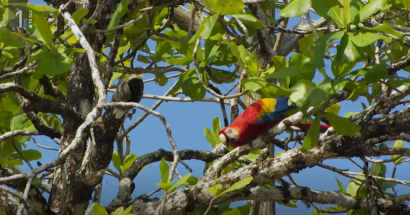
Costa Rica’s pristine rainforests are home to 500,000 plant and animal species, including those at the top of the endangered species list, such as the popular ara macao (scarlet macaw). The film takes us through the formation of the tropical rainforest, which hides many wonders in its wilderness, including its exoticism, deadliness, and the incredible ingenuity of plants and animals.
The rich life of tropical fauna and flora is explained by the film’s expert collaborators, Prof. Dr. Marina Dermastia from the National Institute of Biology and Prof. Dr. Tom Turk from the Biotechnical Faculty of the University of Ljubljana, who have led professional student expeditions to this small paradise on Earth for many years.
Source
RTV Slovenia (RTV365)
Year
2020
Type
Video clip
Format
Video
Keywords
biodiversity, tropical forest, Costa Rica, wildlife, deforestation, pollution, fauna, flora
Območja
World
Return to the Virgin Forest - Costa Rica
TV Slovenia, in collaboration with the National Institute of Biology, presents a film about one of the world's biodiversity hotspots: Costa Rica.
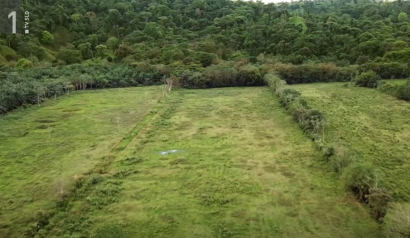
Life in Costa Rica has been deeply influenced by the American corporation United Fruit Company (UFC). The deforestation caused by the establishment of banana plantations severely disrupted tropical ecosystems. The relentless pursuit of profit and intensive cattle ranching reduced Costa Rica’s forest cover to a mere 26% of the country, destroyed primary habitats, and fragmented forested areas. When UFC left Costa Rica, it left behind thousands of unemployed workers and hundreds of hectares of abandoned plantations.
Costa Ricans converted some of these abandoned plantations into oil palm and pineapple plantations, while the rest were reforested with the help of international non-governmental organizations. They also began connecting islands of secondary tropical forest into biological corridors, allowing plants and animals to migrate and thrive. Tropical ecosystems are not only home to 85% of all living species but also serve as the lungs of our planet. A single tropical tree can absorb nearly 12 kg of carbon dioxide annually. By reforesting devastated areas, Costa Rica is also reducing the concentration of greenhouse gases in the atmosphere.
The film takes viewers through the regrowth of tropical forests on abandoned plantations and grasslands, highlighting the key challenges of reforestation at a tropical research station located in the heart of the rainforest in La Gamba.
Source
RTV Slovenia (RTV365)
Year
2020
Type
Video clip
Format
Video
Keywords
biodiversity, tropical forest, Costa Rica, wildlife, deforestation, pollution, fauna, flora
Območja
World
Was this page helpful?
Thank you
Thank you.